
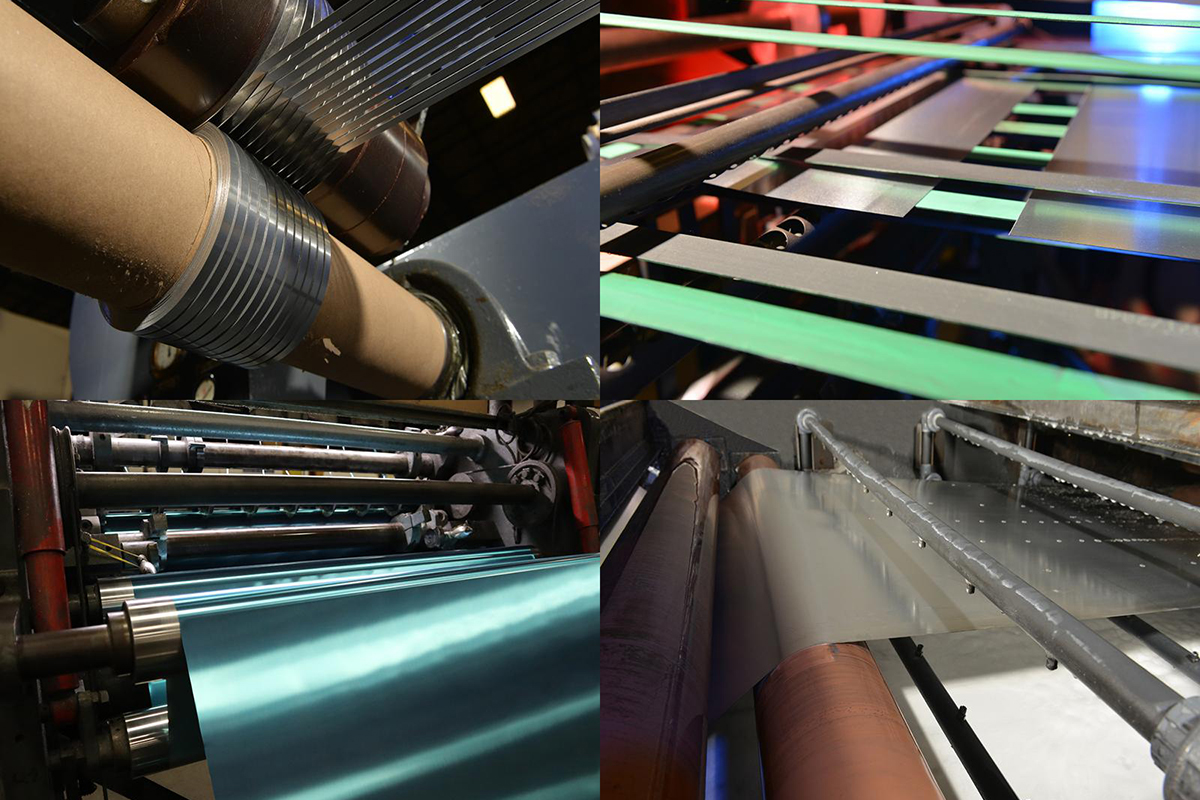
Aluminum Foil Processing: A Complete Guide
Standard aluminum foil rolls aren’t production-ready. Before you can use foil in battery manufacturing, medical packaging, or HVAC systems, it must be converted to exact widths, coated for performance, or cleaned to remove oils that interfere with adhesion. Without professional aluminum foil processing and converting services, material may fail to meet specifications, coatings won’t adhere properly, and production efficiency suffers.
All Foils provides complete toll processing services to deliver material that’s ready for your production line—the first time. As a full-service foil converter with over 45 years of precision converting experience, we transform master coils into production-ready materials through slitting, sheeting, coating, laminating, printing, and cleaning.
This comprehensive guide explains how aluminum foil is processed, the technical capabilities of each converting method, and why professional foil processing services matter for your application.
What Is Aluminum Foil & Converting Processing?
What Is Aluminum Foil Converting & Processing?
- Precision slit coils in custom widths from 0.125″ to 60″
- Flat sheets cut to exact lengths for stamping and fabrication
- Coated foil with functional layers for enhanced performance
- Laminated materials bonding foil to film, paper, or other substrates
- Printed foil with colors, branding, or functional identifiers
- Clean, oil-free surfaces meeting cleanroom and adhesion standards
Toll Processing vs. Stocking Models
Foil converting services operate under two primary business models:
Toll Processing: You supply the master coil material, and the converter performs the specified processing (slitting, coating, etc.) on your inventory. This approach offers maximum control over material specifications and sourcing.
Stocking Programs: The converter maintains inventory of commonly used alloys and gauges, processing material from their stock. This enables faster turnaround and eliminates minimum order quantities from mills.
All Foils offers both models, plus hybrid stocking programs tailored to your delivery requirements and volume patterns.
Material Compatibility
Professional aluminum converting services handle a wide range of aluminum alloys, tempers, and gauges:
Common Alloy Series:
- 1000 Series (1100, 1145, 1235): High purity, excellent formability, ideal for food packaging
- 3000 Series (3003): Enhanced strength, used in HVAC and construction
- 8000 Series (8011, 8079): Superior barrier properties for pharmaceutical and battery applications
Temper Designations:
- O (Annealed): Soft, highly formable, used for deep drawing applications
- H14 (Half-hard): Moderate strength and formability balance
- H18/H19 (Full-hard): Maximum strength and stiffness for structural applications
Gauge Ranges:
- Ultra-thin: 0.0002″ to 0.0005″ (0.005 to 0.0127 mm) for capacitors and electronics
- Light gauge: 0.0005″ to 0.002″ (0.0127 to 0.05 mm) for packaging and insulation
- Medium gauge: 0.002″ to 0.006″ (0.05 to 0.15 mm) for HVAC and construction
- Heavy gauge: 0.006″ to 0.010″ (0.15 to 0.25 mm) for industrial components
Learn more about our comprehensive service capabilities: All Foils Converting Services
- Narrow slit coils
- Flat sheets
- Coated or laminated materials
- Printed foil
- Clean, oil-free surfaces
As a result, these processes help ensure your material meets tight tolerances, surface requirements and end-use performance standards
Learn more about our full service capabilities here: https://www.allfoils.com/services/
CORE FOIL PROCESSING SERVICES
Precision Aluminum Foil Slitting Services
The Challenge: Wide master coils arrive from mills at 48″, 60″, or wider—far too large for most production equipment. Manual cutting creates burrs, inconsistent widths, and edge defects that cause web breaks, electrical shorts, and coating failures.
The Solution: Precision foil slitting cuts wide master coils into narrower widths with tolerances as tight as ±0.005″, delivering clean, burr-free edges essential for high-performance applications.
Technical Specifications
- Width Range: 0.125″ to 60″ (custom widths available)
- Thickness Capability: 0.0002″ to 0.010″ (0.005 to 0.25 mm)
- Width Tolerance: ±0.005″ standard, tighter available
- Edge Quality: Burr-free razor or rotary slitting
- Maximum Coil Weight: Up to 10,000 lbs
- Re-winding Tension: Precision-controlled for uniform density
Slitting Methods
Razor Slitting: Used for ultra-thin foils (0.0002″–0.001″), razor blades produce the cleanest edges without work-hardening the material. Essential for electronic components where edge quality directly impacts performance.
Rotary Slitting: For thicker gauges (0.001″–0.010″), rotary shear knives create precise cuts while maintaining material properties. Ideal for HVAC, packaging, and industrial applications.
Industry-Specific Applications
Electronics & Battery Manufacturing: In lithium-ion battery production, burr-free slit edges prevent short circuits between cathode layers. Slit widths must maintain ±0.003″ tolerance across 10,000-foot coil lengths. All Foils provides the precision slitting that battery manufacturers require, with edge quality inspection on every order.
Capacitor Production: Metallized film capacitors demand ultra-narrow slit widths (0.125″–0.5″) with absolutely no edge defects. Even microscopic burrs create failure points under electrical stress.
Flexible Packaging: Package converters require consistent slit widths for laminating and printing registration. Variations exceeding ±0.010″ cause misalignment in multi-color printing and lamination defects.
Need precision slitting for your application? Our technical team can recommend optimal slit widths and tolerances for your specific requirements.
Learn more: Aluminum Foil Slitting Services | Request Custom Quote

Aluminum Foil Sheeting Services
The Challenge: Many fabrication processes—stamping, die-cutting, lithographic printing—require flat sheets rather than coiled material. Converting coils to sheets in-house ties up production time and requires specialized equipment.
The Solution: Foil sheeting converts master coils into flat sheets cut to exact lengths, delivered ready for immediate use in your production process.
Technical Specifications
- Sheet Sizes: Custom lengths and widths to your specifications
- Standard Sizes: 12″ × 12″ to 60″ × 120″ (larger available)
- Thickness Range: 0.0005″ to 0.010″
- Length Tolerance: ±0.0625″ standard
- Flatness: Controlled through precision tension and leveling
- Edge Finishing: Clean-cut or deburred edges available
Benefits of Pre-Cut Sheets
Eliminates In-House Processing: Receive production-ready material that feeds directly into stamping presses, die cutters, or printing equipment without additional handling.
Reduces Material Waste: Precision cutting to your exact specifications minimizes trim waste compared to cutting over sized sheets down to size.
Improves Production Efficiency: Flat sheets stack uniformly, feed consistently through equipment, and eliminate the coil handling equipment required for roll stock.
Common Applications
Food Packaging: Pre-cut foil sheets for candy wrapping, butter packaging, and lidding stock feed directly into thermoforming and filling lines.
Insulation Facings: HVAC manufacturers use pre-cut foil sheets as radiant barriers and duct facing material, eliminating the need for roll-to-sheet conversion equipment.
Industrial Stamping: Metal fabricators require flat foil sheets for heat exchanger fins, EMI/RFI shielding components, and battery current collectors.
Pharmaceutical Packaging: Blister pack production uses pre-cut foil sheets that feed into forming and sealing equipment with precise registration requirements.
Learn more: Aluminum Foil Sheeting Services | Request Custom Quote

Custom Foil Coating: Epoxy, Adhesive & Functional Coatings
The Challenge: Uncoated aluminum foil lacks the surface properties many applications require. Bare foil in HVAC systems experiences corrosion from condensation, packaging applications need heat-seal layers, and lamination processes require adhesive coatings.
The Solution: Aluminum foil coating applies functional layers that enhance performance, add protective barriers, or enable bonding to other materials.
Technical Specifications
- Coating Thickness Range: 0.1 to 5.0 mils (2.5 to 125 microns)
- Maximum Width: Up to 60″
- Coating Methods: Gravure roll, reverse roll, knife-over-roll
- Curing Options: Thermal (convection/IR), UV-curable
- Adhesion Standards: Cross-hatch testing per ASTM D3359
- Coating Weight Tolerance: ±10% standard, ±5% available
Coating Types & Applications
Epoxy Coatings: Provide excellent corrosion resistance and chemical barrier properties. Used extensively in pharmaceutical packaging, food contact applications (FDA-compliant formulations available), and industrial protective layers. Typical thickness: 0.2–0.5 mils.
Hydrophilic HVAC Coatings: Our HydroBLUE hydrophilic coating reduces condensation buildup on HVAC coils by improving water spreading and drainage. Laboratory testing shows 40% reduction in condensation accumulation compared to uncoated foil. Applied at 0.1–0.3 mils thickness for optimal performance without compromising heat transfer.
Hygroscopic/Desiccant Coatings: Silica-based coatings absorb moisture in sealed packages, protecting moisture-sensitive electronics, pharmaceuticals, and diagnostic test strips. Can absorb up to 30% of coating weight in water vapor.
Pressure-Sensitive Adhesive (PSA) Coatings: Apply acrylic, rubber, or silicone adhesive layers for self-stick applications. Available in permanent, removable, or repositionable formulations. Typical coating weight: 1.0–3.0 mils.
Heat-Seal Coatings: Polyethylene or polyester coatings enable heat sealing to itself or other substrates for packaging applications. Seal temperatures range from 250°F to 400°F depending on formulation.
Primer Coatings: Improve adhesion for subsequent printing, laminating, or coating operations. Essential when bonding dissimilar materials or applying water-based inks to foil surfaces.
Quality Assurance
All coated foil undergoes rigorous testing:
- Coating Weight Verification: Gravimetric analysis ensures consistent coverage
- Adhesion Testing: Cross-hatch and peel strength testing per ASTM standards
- Visual Inspection: 100% web inspection for coating defects, skips, or contamination
- Performance Validation: Application-specific testing (heat-seal strength, barrier properties, corrosion resistance)
Not sure which coating is right for your application? Our technical team can recommend optimal coating formulations based on your performance requirements.
Learn more: Aluminum Foil Coating Services | Request Custom Quote

Printing on Aluminum Foil: Color & Graphic Printing
The Challenge: Standard printing processes struggle with aluminum’s non-porous surface. Inks won’t adhere without proper surface treatment, and high-speed production demands fast-drying formulations that maintain print registration across thousands of feet.
The Solution: Professional foil printing services apply colors, patterns, branding, or functional identifiers directly to foil using specialized printing processes and ink formulations designed for metal substrates.
Color Printing Services
Process: Solid color coating applied to foil surfaces for aesthetic or functional purposes.
Capabilities:
- Color Matching: PMS (Pantone Matching System) color matching for brand consistency
- Coverage: Single-side or duplex (both sides)
- Color Options: Standard colors or custom formulations
- Typical Thickness: 0.3–0.8 mils
Applications:
- Decorative Packaging: Colored foil for confectionery wrapping, gift wrap, and premium packaging
- HVAC Color Coding: Colored coatings identify different duct types or insulation ratings
- Reflective Barriers: White or metallic coatings enhance reflectivity in insulation applications
Graphic Printing Services
Process: Multi-color printing using flexographic or gravure methods for detailed graphics, logos, text, and product information.
Capabilities:
- Print Methods: Flexographic (water-based or solvent inks), Gravure (high-detail applications)
- Color Capacity: Up to 2-color process printing
- Registration Tolerance: ±0.015″ for multi-color work
- Resolution: Up to 150 LPI (lines per inch) for detailed graphics
- Maximum Print Width: Up to 60″
Ink Formulations:
- FDA-Compliant Inks: For direct food contact applications
- Solvent-Based Inks: Fast-drying, excellent adhesion for industrial applications
- Water-Based Inks: Lower VOC emissions for environmentally conscious production
- UV-Curable Inks: Instant curing for high-speed production lines
Industry Applications
Food & Beverage Packaging: Brand logos, nutritional information, and decorative patterns printed on confectionery wrappers, coffee pouches, and yogurt lidding stock. FDA-compliant inks ensure food safety.
Pharmaceutical Packaging: Batch codes, expiration dates, and dosing instructions printed on blister pack foil. High-contrast printing ensures readability for patient safety.
Industrial Identification: Part numbers, specifications, and traceability codes printed on coiled foil enable tracking through supply chains and manufacturing processes.
Promotional Materials: Custom-printed foil for specialty packaging, event materials, and limited-edition product launches creates premium brand perception.

Aluminum Foil Laminating Services
The Challenge: Aluminum foil alone often lacks the properties complex applications require. Pharmaceutical packages need moisture barriers film can’t provide alone. Insulation needs both foil’s reflectivity and kraft paper’s strength. Multi-layer flexible packaging requires specific combinations of barrier, strength, and seal layers.
The Solution: Foil laminating bonds aluminum foil to other materials—film, paper, or additional foil layers—creating composite structures with superior barrier protection, mechanical strength, and functionality.
Technical Specifications
- Lamination Width: Up to 60″
- Foil Thickness Range: 0.00035″ to 0.006″
- Substrate Materials: PET, PE, PP, nylon, kraft paper, additional foil layers
- Adhesive Types: Pressure-sensitive, heat-activated, solvent-based, water-based
- Bond Strength: Up to 400 g/inch (depending on adhesive and substrates)
- Registration Accuracy: ±0.030″ for pattern-to-pattern lamination
Lamination Methods
Dry Lamination: Pre-applied adhesive coating on one substrate, then bonded to foil under heat and pressure. Offers excellent clarity and minimal adhesive migration. Ideal for pharmaceutical and food packaging.
Wet Lamination: Adhesive applied during lamination process. More economical for high-volume production. Common in industrial and construction applications.
Extrusion Lamination: Molten polymer (typically polyethylene) extruded between foil and substrate, creating the bond as it cools. Produces economical heat-sealable structures for food packaging.
Thermal Lamination: Heat-activated adhesive films bonded using heat and pressure only—no solvents required. Environmentally friendly option with excellent bond strength.
Common Lamination Structures
Foil + PET Film: Combines foil’s barrier properties with polyester’s mechanical strength. Used in pharmaceutical blister packs, battery pouches, and high-barrier flexible packaging. Typical structure: 9-micron PET / adhesive / 20-micron foil.
Foil + PE Film: Creates heat-sealable barrier packaging. The foil provides barrier; polyethylene enables heat sealing. Standard for single-serve food packaging. Typical structure: 12-micron PE / adhesive / 7-micron foil.
Foil + Kraft Paper: Adds strength and printability to foil. Extensively used in HVAC duct work, building insulation facings, and industrial wrapping. Typical structure: 30-lb kraft / adhesive / 0.5-mil foil.
Foil + Foil (Duplex): Double foil thickness for maximum light blocking and barrier performance without increasing thickness dramatically. Used in light-sensitive pharmaceutical packaging and complete oxygen barriers.
Multi-Layer Structures: Complex laminates combining three or more layers (e.g., PET/foil/PE/paper) for specialized applications requiring specific combinations of strength, barrier, printability, and sealing properties.
Industry Applications
Flexible Packaging: Retort pouches, coffee bags, and snack packaging use foil laminations providing complete oxygen, moisture, and light barriers while maintaining flexibility and heat-seal capability.
Insulation Systems: Foil-faced kraft paper and foam board combine foil’s radiant heat reflection with insulation’s thermal resistance. Used in residential, commercial, and industrial insulation applications.
Medical Packaging: Sterile barrier packaging for medical devices uses foil/Tyvek® or foil/film laminates providing microbial barriers while enabling sterilization methods (EtO, gamma, steam).
Battery Pouches: Lithium-ion pouch cells use specialized foil/polymer laminates with exceptional moisture barrier and puncture resistance. Multi-layer structures prevent electrolyte leakage and contamination.
Learn more: Aluminum Foil Laminating Services

Aluminum Foil Cleaning Services
The Challenge: Manufacturing processes coat aluminum foil with rolling oils and lubricants that prevent proper adhesion of coatings, adhesives, and inks. Medical device and electronic applications require cleanroom-level surface cleanliness. Standard foil isn’t clean enough for high-performance applications.
The Solution: Industrial foil cleaning removes oils, residues, and contaminants, delivering surfaces ready for coating, laminating, printing, or sensitive electronic applications.
Technical Specifications
- Cleaning Methods: Solvent cleaning, alkaline cleaning, or combination processes
- Residual Oil Content: Reduced to <5 mg/ft² (specification dependent)
- Surface Energy: Increased from ~32 dynes/cm to >40 dynes/cm for improved wettability
- Cleanliness Level: Can meet ISO Class 7 cleanroom standards
- Drying Methods: Hot air, IR, or combination for zero moisture residue
- Maximum Width: Up to 60″
Why Foil Cleaning Matters
Coating Adhesion: Rolling oils create a barrier between foil and applied coatings. Even thin residual oil films (nanometers thick) cause delamination, coating skip, or poor adhesion. Proper cleaning ensures coating adhesion values consistently exceed 300 g/inch peel strength.
Lamination Quality: Adhesive won’t bond to oily surfaces. Uncleaned foil in lamination structures delaminates under stress, heat, or humidity exposure. Clean surfaces are essential for durable lamination bonds.
Print Quality: Inks bead up on oil-contaminated surfaces rather than forming uniform films. Cleaning enables sharp, consistent printing with proper ink adhesion and color density.
Electronic Applications: Surface oils contaminate vacuum deposition processes, cause solder wetting failures, and interfere with wire bonding in electronic assembly. Electronics-grade clean foil is essential for capacitors, EMI/RFI shielding, and flexible circuits.
Industry-Specific Requirements
Medical & Pharmaceutical: Blister pack foil requires pharmaceutical-grade cleanliness to prevent contamination of sterile products. Cleaned foil meets USP Class VI requirements and can withstand sterilization processes without surface degradation.
Electronics Manufacturing: Capacitor foil demands removal of all organic contamination to prevent dielectric breakdown. Surface resistivity specifications require oil-free surfaces. All Foils provides electronics-grade clean foil meeting IPC standards.
Aerospace Applications: Mil-spec aluminum foil for thermal insulation and EMI shielding requires documented cleanliness levels and traceability. Our cleaning processes meet aerospace industry contamination control requirements.
Food Packaging: Direct food contact applications require removal of industrial lubricants to meet FDA regulations. Clean foil eliminates the risk of oil migration into food products.
Learn more: Aluminum Foil Cleaning Services

Aluminum Foil Processing Capabilities at a Glance
| Process | Best For | Width/Size Range | Typical Lead Time | Key Industries |
|---|---|---|---|---|
| Slitting | Narrow widths, precision tolerance | 0.125″ – 60″ widths | 12–15 days | Electronics, batteries, capacitors, packaging |
| Sheeting | Flat stock, stamping blanks | Custom sizes to 60″ × 120″ | 10–12 days | Insulation, metal fabrication, pharmaceutical |
| Coating | Functional surface properties | Up to 60″ wide | 30–60 days | HVAC, packaging, adhesive tapes, corrosion protection |
| Printing | Branding, identification, traceability | Up to 60″ wide | 30–60 days | Food & beverage, pharmaceutical, promotional materials |
| Laminating | Multi-layer structures, barrier packaging | Up to 60″ wide | 30–60 days | Flexible packaging, insulation, medical devices, batteries |
| Cleaning | Oil-free surfaces, coating prep | Up to 60″ wide | 10–12 days | Medical, electronics, aerospace, coating preparation |
Note: Lead times are estimates for standard quantities and specifications. Rush processing available for critical requirements.
Technical Specifications & Quality Standards
Quality Assurance & Certifications
All Foils maintains rigorous quality control throughout every aluminum foil processing operation:
ISO 9001:2015 Certified: Our quality management system ensures consistent processes, documented procedures, and continuous improvement across all converting operations.
In-House Laboratory Testing:
- Physical Testing: Thickness measurement (±0.00005″ accuracy), tensile strength, elongation, and tear resistance
- Surface Quality: Optical inspection, pin-hole detection, coating weight verification
- Color Matching: Spectrophotometer-based color measurement for printing and coating consistency
- Adhesion Testing: Cross-hatch, peel strength, and heat-seal strength testing per ASTM standards
Process Controls:
- Statistical Process Control (SPC): Real-time monitoring of critical dimensions ensures specifications are maintained
- 100% Edge Inspection: Automated systems detect edge defects, burrs, and inconsistencies during slitting
- Web Inspection: Vision systems identify coating defects, print registration errors, and surface contamination
- Dimensional Verification: Every order receives final inspection with documented measurements
Traceability: Complete lot traceability from master coil through all processing steps. Material certifications, test results, and process documentation available for every order.
Tolerance Capabilities
Width Tolerances:
- Standard slitting: ±0.010″
- Precision slitting: ±0.005″
- Ultra-precision (special applications): ±0.003″
Length Tolerances (Sheeting):
- Standard: ±0.0625″ (±1/16″)
- Precision: ±0.031″ (±1/32″)
Coating Weight Tolerances:
- Standard: ±10% of target weight
- Precision: ±5% of target weight
Print Registration:
Pattern-to-edge registration: ±0.030″
Multi-color printing: ±0.015″ color-to-color
Why Professional Foil Processing Services Matter
The Risks of Inadequate Processing
Material Spec Failures: Without precision converting, material doesn’t meet dimensional tolerances, causing:
- Assembly line shutdowns due to incompatible slit widths
- Coating application failures from contaminated surfaces
- Print registration errors from inconsistent material dimensions
Product Performance Issues:
- Electrical shorts from burrs on battery foil
- Package seal failures from inadequate cleaning or coating
- Delamination in harsh environments from poor lamination adhesion
Production Inefficiency:
- Material waste from over sized master coils requiring in-house cutting
- Labor costs performing converting operations better handled by specialists
- Equipment investment in slitting, coating, or laminating machinery
Quality Control Challenges:
- Inconsistent results from manual or semi-automated processes
- Lack of testing equipment to verify specifications
- No traceability documentation for regulated industries
The All Foils Advantage
One-Stop Sourcing & Processing: Combining material supply and foil converting services through a single partner simplifies your supply chain:
- Faster Turnaround: No delays transferring material between suppliers and converters
- Reduced Handling: Material flows directly from mill to processing to your facility
- Better Quality Control: Single point of accountability for both material specifications and processing quality
- Simplified Purchasing: One vendor relationship, one purchase order, one invoice
Experienced Technical Support: Our team averages over 45 years in the foil industry, providing:
- Material selection guidance for your specific application
- Process recommendations based on end-use requirements
- Troubleshooting support for coating, laminating, or printing challenges
- New product development collaboration
Complete Testing Capabilities: In-house laboratory ensures product quality:
- Physical testing verifying thickness, strength, and elongation
- Color measurement for printing and coating consistency
- Adhesion testing for coatings and laminations
- Surface cleanliness verification for critical applications
Just-In-Time Delivery: All Foils maintains over 98% on-time delivery, making us the most reliable foil converter for time-sensitive production schedules. Our stocking programs and rapid processing capabilities support:
- Kanban and JIT delivery systems
- Emergency rush orders (24-48 hour turnaround available)
- Scheduled releases matching your production calendar
- Vendor-managed inventory programs
Substrate & Adhesive Expertise: Beyond foil alone, we work with multiple substrates (film, paper, specialty materials) and adhesives (pressure-sensitive, heat-activated, contact) to engineer optimal solutions for your application.
Frequently Asked Questions About Aluminum Foil Processing
What is aluminum foil converting?
Aluminum foil converting encompasses the specialized processes that transform master coils from aluminum mills into production-ready materials. Converting operations include slitting (cutting wide coils into narrow widths), sheeting (cutting flat sheets), coating (applying functional layers), laminating (bonding to other materials), printing (adding graphics or colors), and cleaning (removing surface contaminants). These processes prepare foil for specific applications ranging from food packaging to electronics manufacturing.
What’s the difference between foil slitting and sheeting?
Slitting cuts wide master coils into narrower widths while maintaining the coiled format—the output is smaller-diameter coils in custom widths. Sheeting cuts coiled material into flat sheets of specific lengths—the output is stacked flat sheets ready for stamping, die-cutting, or printing operations. Choose slitting when you need continuous web material for roll-to-roll processing. Choose sheeting when you need individual pieces for batch processes or manual handling.
Can you print on aluminum foil?
Yes, professional foil printing applies colors, graphics, text, and branding directly to aluminum foil using specialized printing methods. Flexographic printing handles simple graphics and solid colors. Gravure printing delivers high-detail images suitable for premium packaging. Both methods use ink formulations specifically designed for metal substrates, ensuring proper adhesion and durability. FDA-compliant inks are available for direct food contact applications. Common uses include branded food packaging, pharmaceutical blister packs with dosing information, and industrial identification markings.
What is toll processing for aluminum foil?
Toll processing means you supply the aluminum foil master coil material, and the converter performs specified processing operations (slitting, coating, laminating, etc.) on your inventory. You maintain ownership and control over the material specifications and sourcing. The converter charges only for the processing services performed. This model works well when you have existing mill relationships, specific alloy requirements, or material already in inventory requiring conversion to usable forms.
What alloys are best for foil processing?
The optimal alloy depends on your application requirements:
- 1000 series (1100, 1145, 1235): High purity aluminum with excellent formability and corrosion resistance. Best for food packaging, household foil, and applications requiring deep drawing.
- 3000 series (3003): Aluminum-manganese alloy providing greater strength than 1000 series while maintaining good formability. Used in HVAC, heat exchangers, and applications requiring durability.
- 8000 series (8011, 8079): Aluminum alloys optimized for foil applications, offering superior barrier properties and compatibility with coating/laminating processes. Standard for pharmaceutical packaging, battery components, and high-performance flexible packaging.
All Foils processes all common foil alloys and can recommend the optimal choice for your specific requirements.
How do you ensure quality in aluminum foil processing?
Quality assurance in foil processing includes multiple verification points:
- Incoming Material Inspection: Master coils are inspected for thickness, surface quality, and specifications before processing
- Process Monitoring: Statistical process control tracks critical dimensions in real-time during slitting, coating, and laminating
- In-Line Inspection: Automated vision systems detect coating defects, edge quality issues, and surface contamination
- Laboratory Testing: Physical testing (thickness, tensile strength), adhesion testing (peel strength, cross-hatch), and surface analysis (cleanliness verification)
- Final Inspection: Dimensional verification and visual inspection on every order before shipment
- Documentation: Complete traceability with material certifications, test results, and processing records
All Foils maintains ISO 9001:2015 certification ensuring documented quality management throughout all operations.
What are typical lead times for foil converting services?
Lead times vary by processing type and order volume:
- Slitting: 12-15 business days for standard orders
- Sheeting: 10-12 business days for standard sizes
- Coating: 30-60 business days depending on coating type
- Laminating: 30-60 business days for standard structures
- Printing: 30-60 business days including proof approval
- Cleaning: 10-12 business days for standard cleaning
Rush processing is available for critical requirements, with some services available in 24-48 hours. Stocking programs can enable same-day or next-day shipment of frequently ordered specifications.
Can aluminum foil be laminated to other materials?
Yes, aluminum foil laminates to a wide variety of materials creating composite structures with enhanced properties:
- Films: PET (polyester), PE (polyethylene), PP (polypropylene), and nylon films combine with foil for flexible packaging applications
- Paper: Kraft paper, tissue, and specialty papers bond to foil for insulation facings and industrial applications
- Additional Foil Layers: Multiple foil layers create duplex structures with enhanced barrier properties and light blocking
- Specialty Materials: Tyvek® for medical packaging, foam for insulation, and fabric for specialized industrial applications
Different adhesive systems (pressure-sensitive, heat-activated, solvent-based, water-based, or extrusion lamination) enable bonding specific material combinations optimized for your application.
Get Started with Custom Aluminum Foil Processing
Ready to streamline your foil supply chain with professional converting services? All Foils delivers precision processing tailored to your specifications—from prototype quantities to high-volume production runs.
What to Prepare for Your Quote Request
Material Specifications:
- Alloy (1100, 3003, 8011, etc.)
- Temper (O, H14, H18, H19)
- Thickness (in mils or inches)
- Current width (if slitting existing inventory)
Processing Requirements:
- Final width(s) needed (for slitting)
- Sheet dimensions (for sheeting)
- Coating type and thickness (for coating services)
- Substrate materials (for laminating)
- Print specifications (for printing services)
Order Details:
- Quantity required
- Delivery timeline
- Shipping destination
- Any special packaging requirements
Contact All Foils Today
Phone: 1-800-521-0054
(Speak directly with our technical team about your aluminum foil processing requirements)
Online Quote Request: Submit Your Specifications
(Most quotes delivered within 24 hours)
Browse Our Complete Service Offerings: All Foils Converting Services