
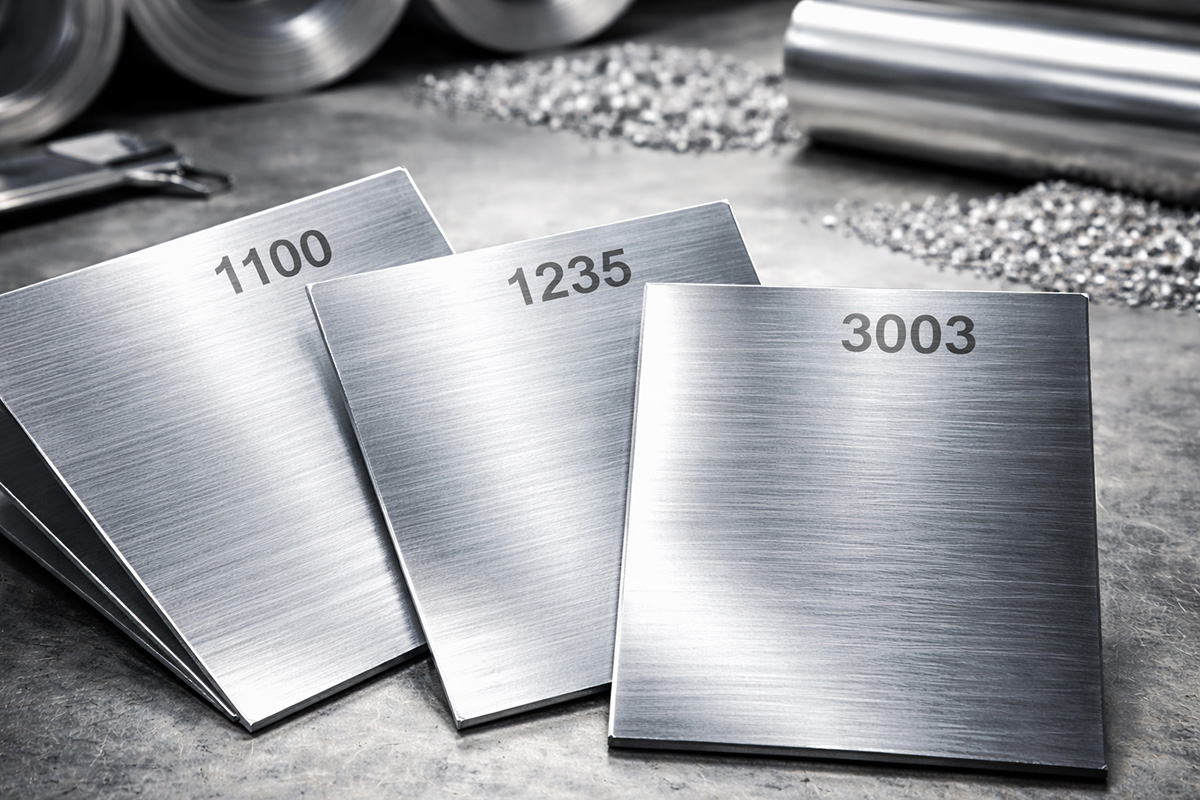
1100 vs. 1235 vs. 3003 Aluminum: What’s the Difference?
Choosing the Right Alloy for Your Application
Selecting the right aluminum alloy is critical to ensuring your product performs as expected. While several alloys are available, 1100, 1235 and 3003 aluminum are among the most commonly used for light-gauge applications.
Each offers unique benefits depending on your requirements—whether that’s formability, strength or corrosion resistance.
1100 Aluminum: High Purity & Excellent Formability
Best for: General purpose applications, chemical resistance, deep drawing
1100 aluminum is known for its high purity (99% aluminum) and exceptional workability. It’s easy to form, bend and shape, making it ideal for applications that require flexibility and corrosion resistance.
- Excellent corrosion resistance
- High thermal and electrical conductivity
- Soft and highly formable
👉 Common uses include insulation, chemical handling equipment and food-related applications.
1235 Aluminum: Ideal for Thin-Gauge Foil
Best for: Ultra-thin foil, packaging, electrical applications
1235 aluminum is widely used in very thin-gauge foil (.0005” and below). It offers strong barrier properties and consistent performance in applications where cleanliness and uniformity are critical.
- Designed for thin foil applications
- Good strength-to-weight ratio
- Reliable for high-volume production
👉 Common uses include capacitor foil, packaging and specialized industrial applications.
3003 Aluminum: Added Strength & Durability
Best for: Structural applications, HVAC, building & construction
3003 aluminum contains manganese, giving it greater strength than 1100 while maintaining good workability. It’s a go-to alloy when durability and corrosion resistance are both required.
- Stronger than 1100 aluminum
- Excellent corrosion resistance
- Good formability
👉 Common uses include HVAC components, roofing, siding and other building materials.
Quick Comparison
| Alloy | Key Benefit | Best Use |
|---|---|---|
| 1100 | High purity, easy to form | General applications, insulation |
| 1235 | Ultra-thin capability | Foil, packaging, capacitors |
| 3003 | Higher strength | Construction, HVAC |
How to Choose the Right Alloy
The best alloy for your application depends on a few key factors:
- Thickness requirements – Ultra-thin foil points to 1235
- Strength needs – 3003 offers added durability
- Formability – 1100 is best for deep drawing and shaping
- End-use environment – Consider corrosion resistance and exposure
If you’re unsure, working with an experienced supplier can help ensure you select the right material the first time.
Why Work with All Foils?
At All Foils, we stock and process a wide range of aluminum alloys, including 1100, 1235 and 3003, in various gauges and tempers.
We support your application with:
- Precision slitting and sheeting
- Coating and cleaning services
- Flexible order quantities
- Reliable lead times
As a domestic supplier and converter, we help reduce lead times and simplify your supply chain with a one-stop solution.
Get Expert Guidance
Need help choosing the right aluminum alloy for your application?
Call 1-800-521-0054 or submit a request here: https://www.allfoils.com/contact/
Our team is ready to help you find the right material for your needs.